Emerald
Foundation

The Hague, the Netherlands
Origins / Background

Liane Collot d’Herbois
Painter and painting therapist
17.12.1907 – 17.09.1999
The content of the training course is based on general medicine and spiritual science developed from the deep insights of Dr. Rudolf Steiner (1861-1925) which he called “Anthroposophy”.
Out of spiritual science Rudolf Steiner created the foundations for widening the scope of medical science. The fundamental principles are reflected in many lectures and in the book: “Extending Practical Medicine” (GA 27) which he wrote in cooperation with the Dutch doctor Ita Wegman, (1876-1943).
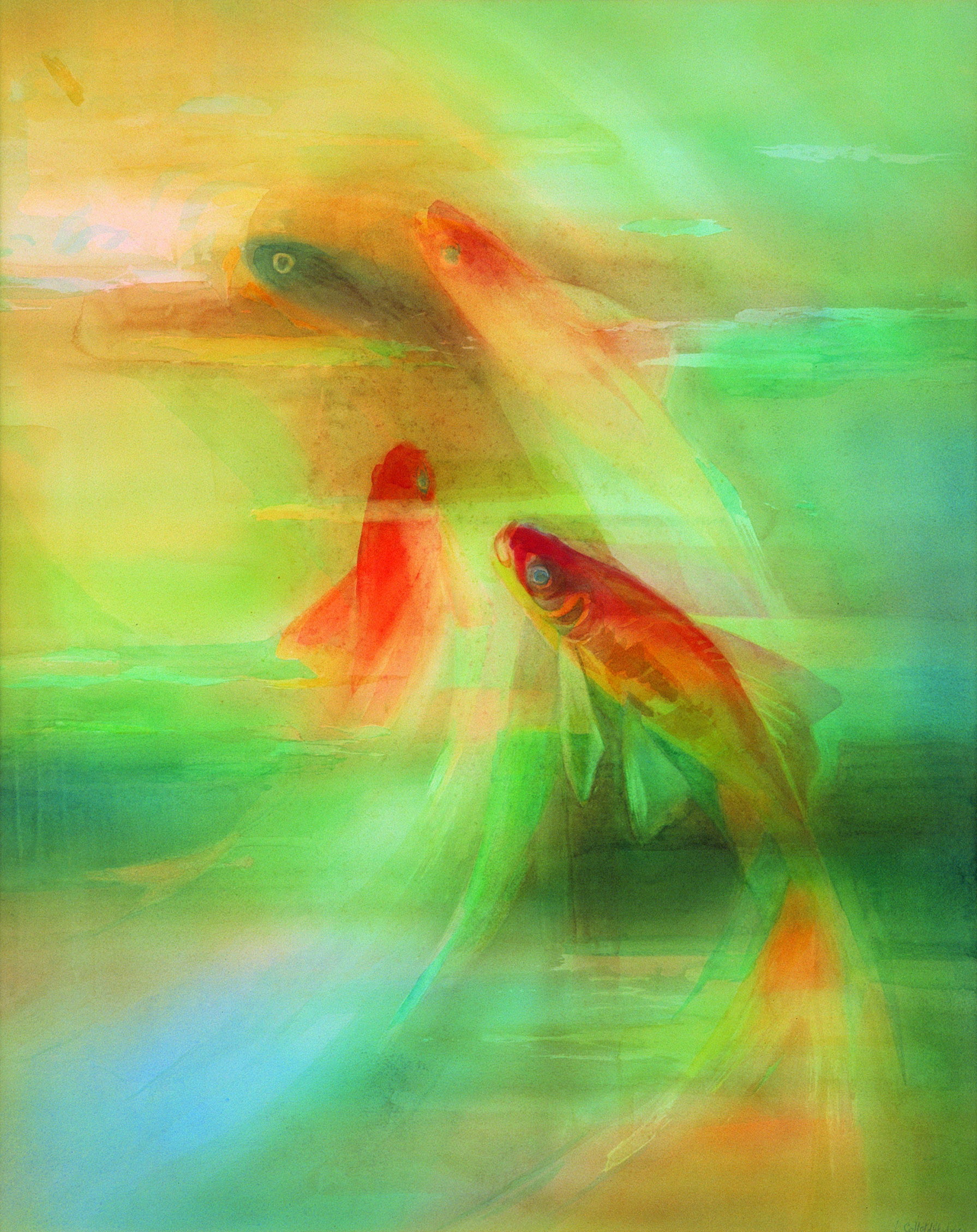
The painter Liane Collot d’Herbois (1907-1999) developed a colour theory for painting and painting therapy based on the same foundations. She gave the impulse for the start of the Emerald Foundation training in painting therapy.
The training course in painting therapy at Emerald is a schooling path based on anthroposophy.
In the light of the aspect of schooling, the individial path of the student is always respected.
Working Principles
The working principles of this medical painting therapy are the phenomena light, colour and darkness. Visible colour is created in the meeting of the invisible creating forces of light and darkness. By painting in accordance with the laws of light and darkness the colours show their working in an objective colour dynamic and the possibility arises of creating a transparent coloured space (a colour perspective). This cosmic trinity of light colour and darkness is an image of the threefold human being as spirit, soul and body.
Light and darkness are the pathways for the incarnation of the “I” through the upper pole (the nerve-sense system) and the lower pole (the metabolic limb system) of the human being. In therapy light and darkness give the impulse for the healing process. Healing itself comes into being in the meeting of light and darkness, visible as moving colours in space. In the human being this healing process works through the rhythms of the middle system (the breathing and circulation).
Techniques
In the painting therapy sessions light colour and darkness are made visible in the following ways:
- By using pencil, colouring pencils or pastels on drawing paper
- By using charcoal on large format drawing paper
- Painting layer on layer of watercolour on semi-wet paper
- By using the veiling technique on stretched watercolour paper.

Who is the training course for?
There is a minimum educational requirement: completed secondary education. Otherwise, our training course is especially suited for:
- Everyone who wants to become a painting therapist and is interested in the working of light, colour and darkness, outside and inside the human being.
- Doctors, psychiatrists, psychologists, medical students and therapists
- Nurses, curative educators, social workers and teachers
- Artists
Contact us